


Healthcare providers today are competing for attention in a market that looks nothing like it did a decade ago. Patients research symptoms before they book an appointment, compare providers online, read reviews, and often choose a practice based on how trustworthy it appears digitally before they ever speak to a receptionist. This shift has made healthcare marketing one of the most important investments a practice can make, not just for patient acquisition, but for long-term brand credibility and sustainable growth.
Whether you're a solo practitioner, a multi-location clinic, or a specialty provider, understanding how to build a strong, recognizable brand is no longer optional. It's the foundation that determines whether patients choose you or your competitor down the street.
What Is Healthcare Marketing?
It's the strategic process of promoting medical practices, services, and healthcare organizations to attract, engage, and retain patients. Unlike traditional advertising, marketing in health care requires a careful balance of compliance, trust-building, and patient education, since the "product" being marketed directly affects people's health and wellbeing.
Marketing for healthcare isn't limited to advertisements or flyers. It spans a wide range of disciplines, including:
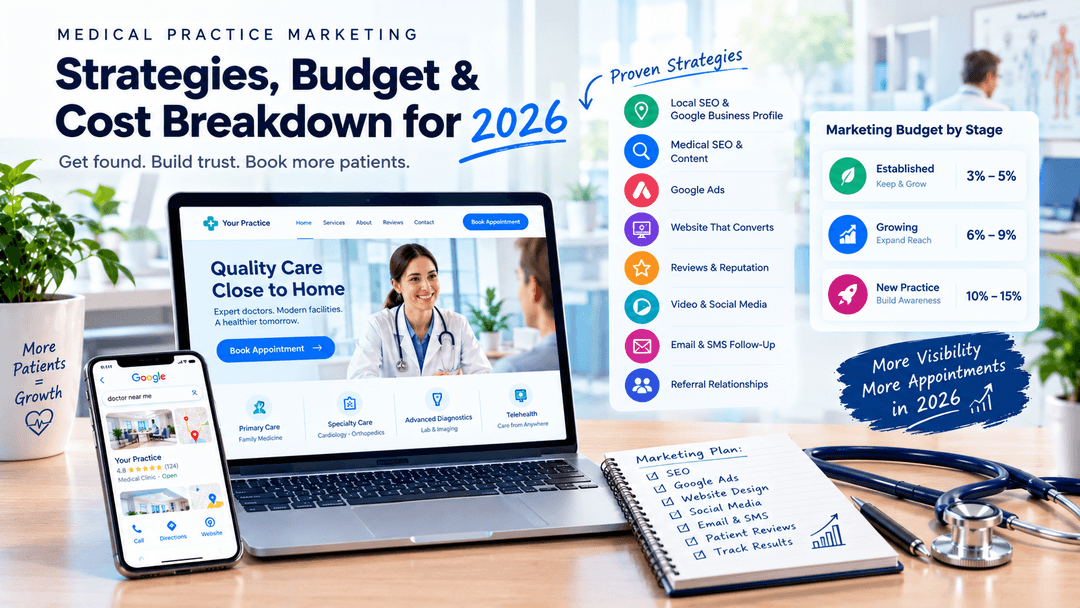
- Search engine optimization (SEO) to help patients find you online
- Website design and user experience
- Paid advertising, including Google Ads
- Content marketing and patient education
- Social media engagement
- Reputation and review management
- Referral network development
Each of these components works together to create a cohesive strategy, one that positions your practice as a credible, patient-first authority in your field.
How Does the Healthcare Industry Use Marketing?
Providers use it primarily to build awareness, establish trust, and generate consistent patient volume. Because healthcare decisions are deeply personal, marketing in this industry leans heavily on education and reassurance rather than aggressive sales tactics.
For example, a physical therapy clinic might use blog content to explain recovery timelines for common injuries, while a specialty practice might use healthcare advertising campaigns to reach patients actively searching for treatment options. Hospitals and larger health systems often combine broad brand campaigns with hyper-local targeting to reach specific communities.
The common thread across all of these efforts is trust. Patients are far more likely to choose a provider that feels transparent, knowledgeable, and genuinely invested in their outcomes.
Why Is Healthcare Marketing Important?
Because visibility alone doesn't guarantee patient trust and trust is what ultimately drives conversions. A few key reasons practices can't afford to ignore marketing:
- Patients research before they call. Most patients look up a provider's website, reviews, and social presence before booking.
- Competition has increased. With more providers competing for the same patient base, differentiation matters.
- Referral networks are evolving. Traditional word-of-mouth referrals are now supplemented and sometimes replaced by digital discovery and strategic partnerships.
- Revenue growth depends on consistent patient flow. Without a marketing strategy, practices rely on unpredictable referral patterns rather than sustainable, scalable growth.
A well-executed healthcare marketing strategy doesn't just bring in new patients, it strengthens retention, improves reputation, and creates long-term practice value.
Why Branding in Healthcare Marketing Matters More Than You Think?
Branding in healthcare marketing goes far beyond a logo or color scheme. It's the sum of every impression a patient forms about your practice, from your website's first loading screen to the tone of your social media captions to how your front desk staff answers the phone.
Strong healthcare branding accomplishes three things:
1. It builds immediate trust. Patients associate polished, professional branding with competence. A clean, modern website and clear messaging signal that a practice takes its work seriously.
2. It creates differentiation. In competitive specialties, patients often can't easily tell one provider apart from another. Strong branding highlights what makes your approach, philosophy, or patient experience unique.
3. It supports long-term loyalty. Consistent branding across your website, social channels, and marketing materials reinforces recognition, which increases the likelihood of repeat visits and referrals.
For practices looking to build their positioning, working with a team that understands both healthcare compliance and modern branding such as a dedicated healthcare marketing services, digit marketing partner, specialized in healthcare can accelerate this process dramatically.
Core Components of a Strong Healthcare Marketing Strategy
Building a brand that resonates with patients requires a multi-channel approach. Here's what an effective healthcare marketing strategy typically includes.
1. Search Engine Optimization (SEO)
Most patient journeys start with a search engine. If your practice doesn't appear on the first page of results for relevant terms, you're losing patients to competitors who do.
A strong medical SEO strategy includes:
- Keyword research based on patient search intent
- Optimized service pages for each treatment or specialty
- Location-based SEO for practices serving specific regions
- Technical SEO improvements (site speed, mobile optimization, structured data)
- Content clusters that establish topical authority around your specialties
Investing in medical SEO is one of the highest-ROI strategies available to healthcare providers because it builds sustainable, long-term visibility rather than relying solely on paid traffic.
2. Website Design and User Experience
Your website is often the first real interaction a prospective patient has with your practice. If it's outdated, slow, or difficult to navigate, patients will leave and likely choose a competitor instead.
A high-performing healthcare website should include:
- Clear, intuitive navigation to service pages
- Fast load times and mobile responsiveness
- Easy appointment scheduling or contact options
- Trust signals like credentials, testimonials, and certifications
- SEO-friendly structure that supports content growth
A thoughtful website design overhaul doesn't just improve aesthetics it directly impacts conversion rates and patient trust from the very first click.
3. Google Ads and Paid Search
While organic strategies build long-term authority, Google Ads allow practices to generate immediate visibility for high-intent searches such as patients actively looking for a specific treatment or provider in their area.
An effective paid search strategy for healthcare includes:
- Highly targeted keyword campaigns tied to specific services
- Location-based targeting for regional practices
- Conversion-optimized landing pages
- Ongoing performance tracking and budget optimization
Pairing Google Ads with organic SEO creates a balanced strategy one channel delivers immediate leads, while the other builds sustainable, long-term growth.
4. Content Marketing and Patient Education
Marketing medical services effectively requires more than promotional messaging it requires genuine education. Blog content, FAQs, and downloadable guides help patients understand their conditions, treatment options, and what to expect, which builds trust before they ever step into your office.
Content also plays a critical role in SEO, since search engines reward websites that consistently publish authoritative, relevant information.
5. Social Media and Community Engagement
Online marketing for healthcare increasingly relies on social platforms to humanize a practice and build community trust. Effective healthcare social strategies typically include:
- Educational posts that simplify complex medical topics
- Behind-the-scenes content that builds familiarity with your team
- Patient testimonials (with proper consent and compliance)
- Platform-specific content, LinkedIn for professional credibility, Instagram for visual storytelling, and YouTube for in-depth educational video content
How to Market Healthcare Services: A Practical Approach
If you're wondering how to market healthcare services effectively without overwhelming your internal team, the key is prioritization. Start with these steps:
- Audit your current digital presence. Review your website, SEO performance, and social channels to identify gaps.
- Define your brand positioning. Clarify what makes your practice different and who your ideal patient is.
- Build out core service pages. Each service or specialty should have a dedicated, SEO-optimized page.
- Launch a content calendar. Consistency matters more than volume, a steady cadence of educational content outperforms sporadic bursts.
- Layer in paid campaigns. Use Google Ads strategically to fill visibility gaps while organic efforts grow.
- Track and refine. Marketing isn't a one-time project, it requires ongoing measurement and adjustment.
This approach applies whether you're focused on marketing for doctors, specialty clinics, or larger healthcare organizations. The principles of trust, visibility, and consistency remain the same.
Marketing for Healthcare Professionals: Staying Compliant While Staying Competitive
Marketing for healthcare professionals comes with unique challenges that other industries don't face, particularly around compliance, patient privacy, and the ethical presentation of medical information. This is why generic marketing advice often falls short in healthcare settings.
A specialized approach considers:
- HIPAA-conscious content and testimonial practices
- Accurate, non-misleading claims about treatments or outcomes
- Professional, credible tone across all channels
- Careful handling of patient reviews and social proof
Providers who partner with agencies experienced in marketing in the healthcare industry are better positioned to grow confidently without running into compliance issues.
The Future of Healthcare Marketing
The future of healthcare marketing is increasingly personalized, data-driven, and multi-channel. A few trends shaping the next several years include:
- AI-assisted content and search behavior. As patients use AI tools to research symptoms and providers, practices will need to optimize for how information is surfaced across new discovery channels, not just traditional search engines.
- Video-first content. Short-form and educational video content continues to grow in importance, particularly on platforms like YouTube and Instagram.
- Hyper-local targeting. As competition increases, precise geographic targeting will become even more critical for both SEO and paid campaigns.
- Referral network technology. Digital tools that streamline and track referral relationships particularly in specialties like personal injury and workers' compensation will play a growing role in practice growth strategies.
Practices that invest early in these areas will have a significant advantage over competitors who rely solely on traditional referral patterns.
Building a Brand That Lasts
How to do medical marketing successfully ultimately comes down to consistency, trust, and a willingness to invest in both short-term visibility and long-term authority. A strong healthcare brand isn't built overnight. It's the result of a well-optimized website, a thoughtful content strategy, strategic paid campaigns, and a consistent presence across the channels your patients actually use.
For healthcare providers ready to strengthen their brand and generate consistent, sustainable patient growth, working with a partner who understands the nuances of the industry makes all the difference. From medical SEO and website design to Google Ads management and full-scale healthcare marketing services, the right strategy can transform how patients discover and choose your practice.
-1.png&w=1080&q=75)