


How to Choose a Healthcare Marketing Agency: 10 Questions to Ask Before You Sign
Table of Content
- Why the Right Agency Matters More in Healthcare
- 10 Questions to Ask Before You Sign
- Red Flags That Should Make You Walk Away
- What a Good Agency Relationship Looks Like
- How to Compare Agencies Side by Side
- Final Thoughts
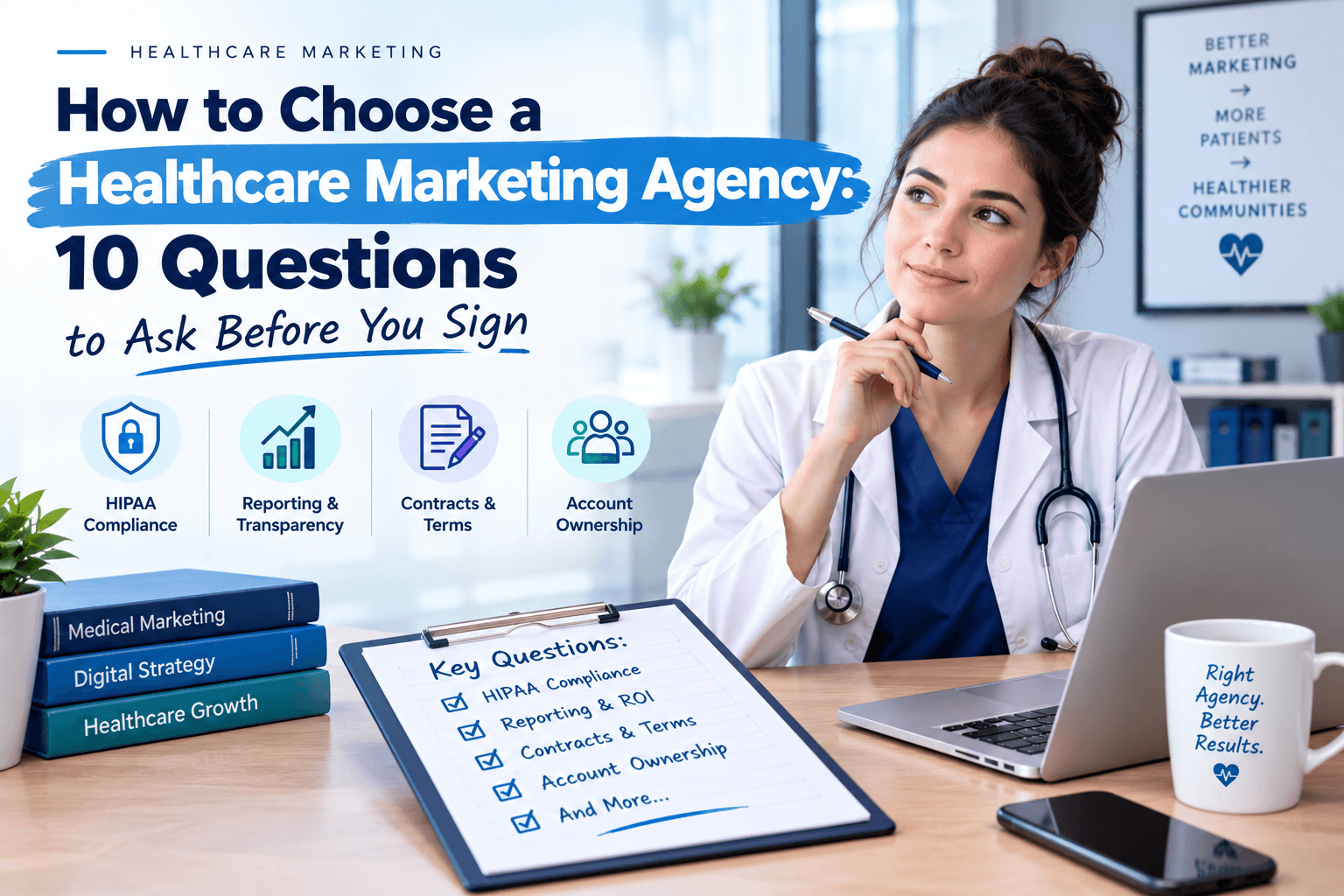
Every agency says it can fill your schedule. Very few can show you how. If you're a doctor, practice manager, or clinic owner trying to work out how to choose a healthcare marketing agency, the sales pitch is the least useful part of the process. The questions you ask, and the quality of the answers, tell you far more than any proposal deck. This guide walks through the ten questions worth asking before you sign anything, and what a good answer sounds like.
Why the Right Agency Matters More in Healthcare
Hiring an agency is one of the biggest growth decisions a practice makes. The right partner brings in qualified patients, protects your reputation, and gives you a clear picture of what your budget is producing. The wrong one burns through ad spend, reports on clicks instead of patients, and can put patient privacy at risk.
Many practices learn this after the fact. They sign with a general firm that treats a clinic like a restaurant or a real estate office, then wonder why the leads don't turn into appointments. Healthcare needs clinical nuance, careful handling of patient data, and honest tracking of which channel actually produced a patient. If you want the bigger picture of how those channels fit together first, our healthcare digital marketing guide is a good place to start.
10 Questions to Ask Before You Sign
1. Do You Work Only With Healthcare Practices?
An agency that also serves restaurants and retail brands rarely understands physician referral patterns, medical advertising rules, or why a patient hesitates before booking surgery. A good answer is that healthcare is their main focus, they can name the specialties they work with, and they already know the language of your field. If they can talk about orthopedic marketing or dermatology marketing with real specifics, that's a good sign. If every example sounds generic, it isn't.
2. How Do You Handle HIPAA Across Every Channel?
Patient privacy is the one area where a marketing mistake can turn into a legal problem. Ask specifically about lead forms, call recording, call tracking, email, and the tracking pixels on your website. Major ad platforms generally do not sign Business Associate Agreements, so a good agency should be able to explain how it keeps protected health information away from them. Ask which vendors in their stack will sign a BAA, and ask for that in writing. "We've never had a problem" is not a process.
3. Can You Show Proven Results in My Specialty?
Claims like "traffic up 200%" don't pay your overhead. Ask for case studies from practices like yours, with numbers that matter: new patient inquiries, booked consultations, and cost per new patient. A confident agency will share specifics and let you speak to a current client.
4. How Do You Measure Success?
Clicks, impressions, and page views aren't patients. The real question is whether the agency can connect a Google click or a phone call to an actual booked appointment. Look for call tracking, form tracking, and a way to count new patients by source, not just leads. If their answer stops at website traffic, they're measuring activity rather than growth.
5. How Is Your Pricing Structured?
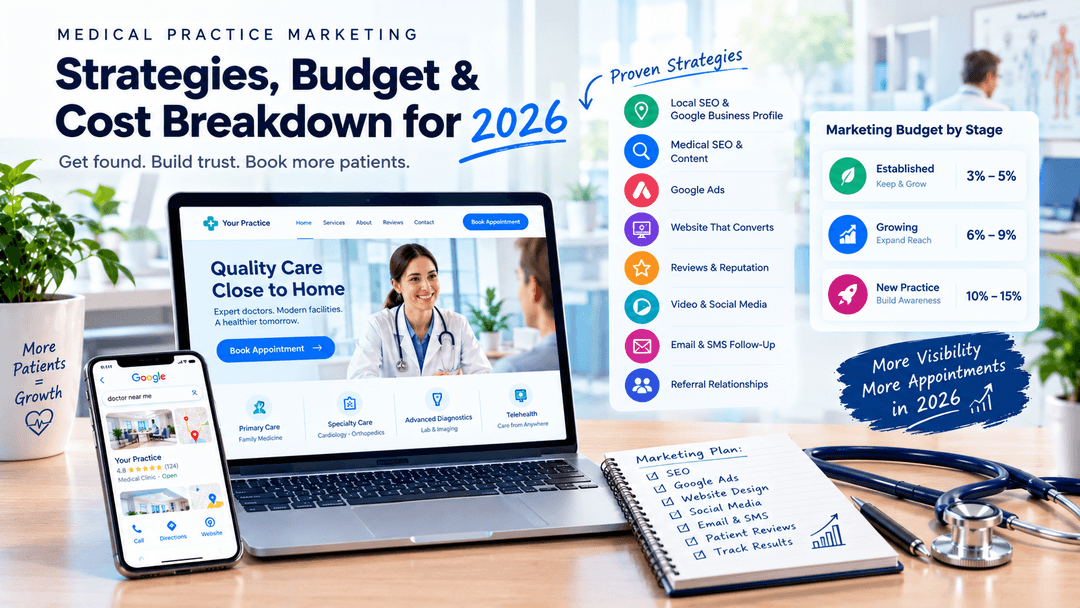
Get the full picture before you commit: the management fee, the ad budget paid directly to platforms, and any one-time costs for setup, landing pages, or software. Ask what happens when you need work outside the original scope. A proposal that bundles ad spend and agency fees into one vague number makes it hard to see where your money goes. For typical ranges by service, see our guide to medical practice marketing costs and budgets.
6. Who Will Actually Manage My Account?
The person who sells you the service is often not the person who runs it. Ask who your day-to-day contact will be, how much healthcare experience they have, and how often you'll speak. A named account manager and a set meeting schedule beat a shared inbox every time.
7. What Exactly Is in the Contract?
A vague agreement is the most common trap. Your contract should list monthly deliverables, who manages ad spend, content schedules, reporting, and how you can exit. Watch for auto-renewals that are hard to cancel and fees for getting your own data back.
8. What Does Your Monthly Report Include?
A twenty-page PDF of charts can hide the fact that nothing is working. A useful report is short and focused on business results: cost per lead, cost per booked patient, call summaries, conversion rate from inquiry to appointment, and the source of each new patient. Your monthly review should be about growth, not jargon.
9. Who Owns the Ad Accounts, Website, and Data?
This protects you legally. Some agencies set up Google Ads and analytics under their own names, and if you leave, you lose your history and your data. Every ad account, analytics property, domain, and website asset should sit under your practice's name, with full admin access for you at all times. This applies to your website design as much as your campaigns.
10. What Trial Terms or Performance Protections Do You Offer?
Be careful with agencies that demand a long lock-in before they've shown any results. Confident agencies keep clients by performing, not by trapping them. Look for an initial audit, flexible terms, or a trial period. At Healthcareketing, we offer a free consultation and a 15-day trial plan with no long-term commitment, so you can see how we work before you decide.
Red Flags That Should Make You Walk Away
Some warning signs show up early. Guaranteed rankings are one, since no honest agency controls Google. Reports that only show clicks and impressions are another. So are agency-owned ad accounts, vague deliverables, long lock-ins with no results period, and any hesitation when you ask how they protect patient data.
Pay attention to how the agency reacts to your questions, too. A good partner welcomes them. An agency that gets defensive about contracts, ownership, or reporting is telling you how the relationship will go.
What a Good Agency Relationship Looks Like
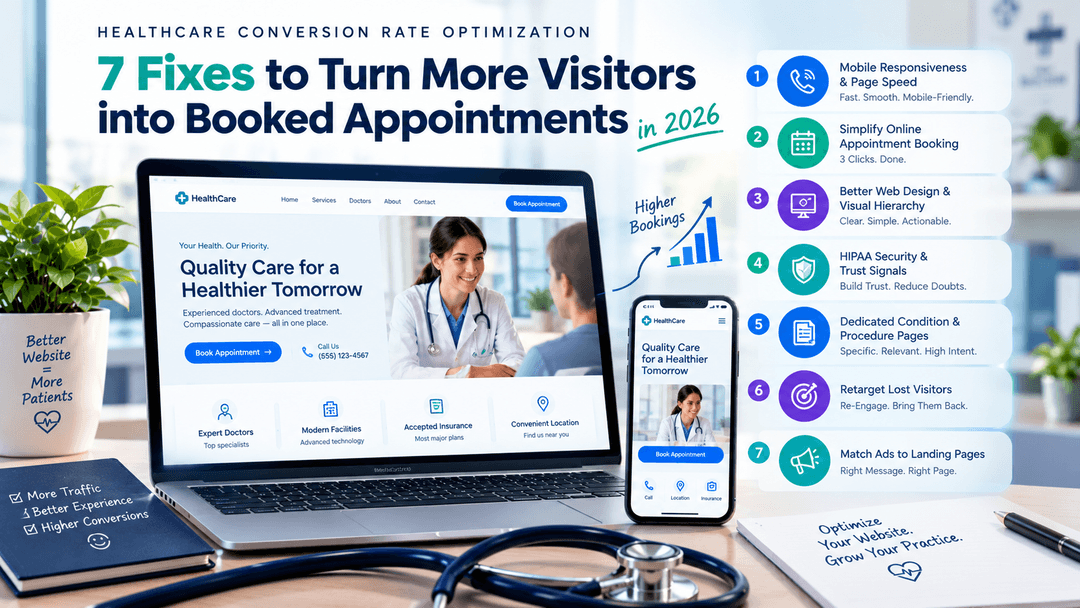
The best agencies feel like an extension of your team. They know your specialty, explain their work in plain language, and tie every campaign back to booked patients. They'll usually recommend fixing the foundations before scaling spend, such as a fast, mobile-friendly website, a complete Google Business Profile, and solid medical SEO, and then layer paid campaigns on top through Google Ads for healthcare providers where it makes sense.
You should also expect honesty about timelines. Paid campaigns can bring inquiries within weeks, while SEO and reputation building take months. An agency that promises instant, effortless results is selling something other than a strategy.
How to Compare Agencies Side by Side
Shortlist two or three healthcare-focused agencies rather than ten, and ask each one the same ten questions so you can compare answers fairly. Request a reference from a practice in your specialty, and read the contract before you agree to anything verbally. If the agency allows it, start small and judge the results by booked patients, not by how busy the reports look.
Not sure which channels to prioritize first? Our medical practice marketing guide explains where most practices should start.
Final Thoughts
Choosing a healthcare marketing agency comes down to trust, transparency, and proof. The right partner understands healthcare, protects your patients' data, reports on real outcomes, and lets you own everything they build for you. Ask the ten questions above, compare the answers honestly, and don't let a polished pitch replace evidence.
If you'd like to see how we answer them, explore our healthcare marketing services or book a free consultation and start with a 15-day trial plan.
-1.png&w=1080&q=75)